
Fern: A Short Story

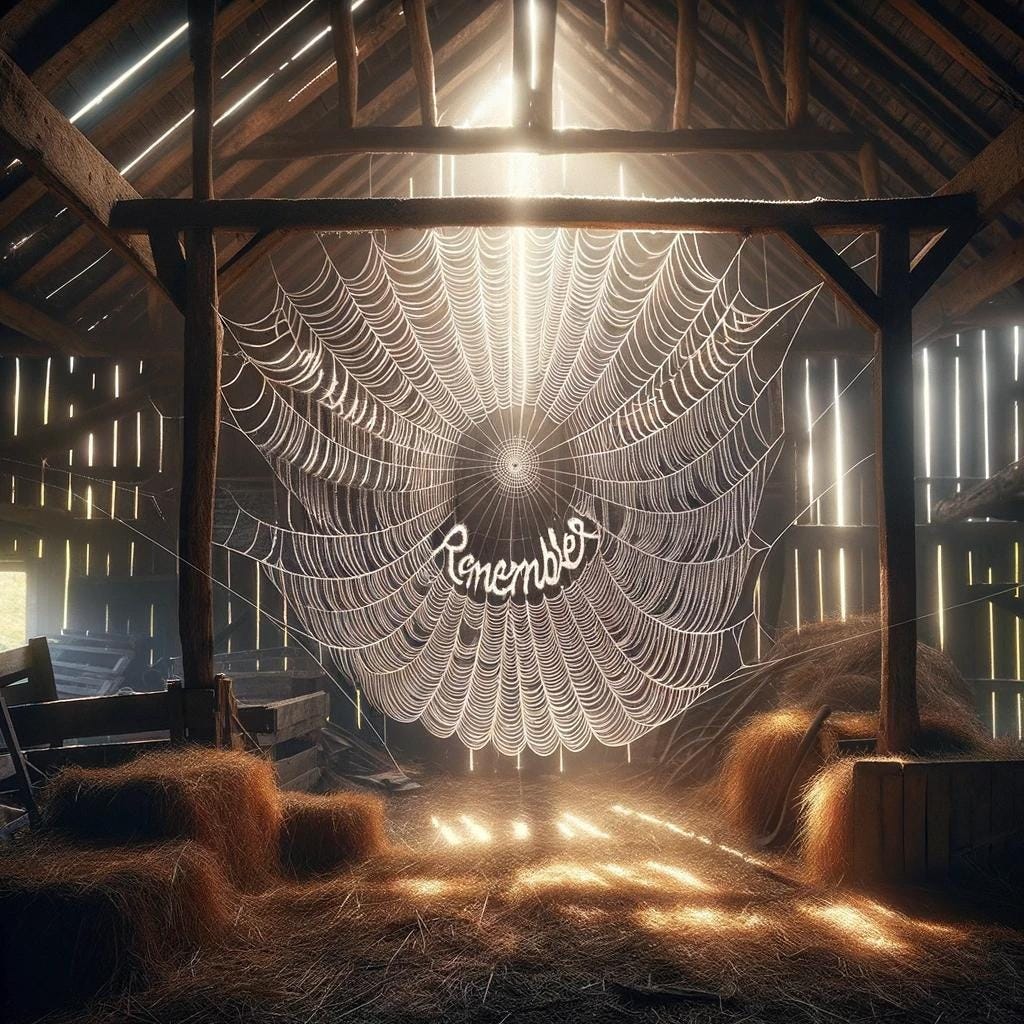
She knew they called her Funny Fern. Never to her face, but still she knew.
“No one means any harm,” her brother Avery reassured her.
Fern just nodded. Like most men with more farmlands than farmhands, Avery was too busy to pay much attention to what wasn’t right in front of his face. Only Henry was different.
It was Henry who stopped her from trying to walk all the way to the fairgrounds when she realized who they’d left behind.
“It’s too far, Fern.”
“Plenty of trucks go that way. Someone will give me a ride.”
“The person who picks us up like as not will know yer pa, and tell ‘im,” was all Henry said to that. Fern noticed that he said pick us up and not pick you up and was grateful.
They said it more now that Henry was gone. He died more than twenty long years ago and she still missed him the same, always waking a little surprised to find his side of the bed unslept in.
They were married forty years – good years, even the years of sickness were good years. When the shaking got so Henry couldn’t hold a fork, Fern held it for him. She would have gladly kept holding it for thirty more years but there were only five. At the end, he could not speak, except with his eyes. She read to him in the evenings, and when he closed his eyes for the last time she closed her book and sat there with him until the sun came up before she called for Lurvy.
She never remarried – what would be the point? Henry was the only man for Fern, the only man there ever could have been for her. The only one who knew what really happened those long afternoons in her uncle’s barn, the grief of the empty doorway, and later, the grave down by the creek that ran between the Arable and Zuckerman farms. It was Henry who had chiseled Wilbur’s name into the stone she paid for with money earned walking beans.
Henry was her first friend and her best friend. She married him and they moved into the Zuckerman farm after her Aunt and Uncle passed away within six months of each other, after seventy years of marriage. At Uncle Homer’s funeral the old people shook Fern’s hand and said what a good man he was. Some of them recalled the summer of the web, saying what a wonderful time it had been. Fern agreed – it had been a strange and wonderful summer.
But everything changed after the Fair.
A picture of the last web message, Charlotte’s final word on the subject of Wilbur’s life, appeared in newspapers in far away places Fern had read about in school – places like Montana and California and New Mexico and Colorado, even New York. Throughout that fall people came to the Zuckerman farm hoping to see the miracle of the web.
They came in cars and trucks and in one case, on horseback. Many of them clutched a newspaper article with the now-famous photo in their hands, the one taken at the Fair of Wilbur standing below the web with the word Humble knitted into it, looking fresh and pink from a buttermilk bath.
In one of these articles, an entomologist at the University was interviewed about what he called “the web message phenomenon”.
“I suspect it was a Signature Spider,” he said, “which gets its name from the unique patterns it weaves in the center of its web. The patterns, called stabilimentum, can look astonishingly like letters of the alphabet. A little imagination and the power of suggestion and everyone saw the same word.”
“Charlotte Aranea Cavatica was an orb weaver,” Fern said indignantly, when she saw the article. “Anyone could see that.”
“He may be a university professor but he doesn’t know much about life on a farm,” Uncle Homer said when he read the story. "
“Nor much about barn spiders,” added Mrs. Zuckerman.
Most of the web tourists were polite and a little awestruck to be in a place they’d read about in the newspaper. But some acted as though the farm was an attraction at the Fair – upon finding no new web, they stared at Wilbur for awhile, then wandered around the dooryard, their children kicking up clouds of dust chasing the goslings. Sometimes they came right up the steps of the farmhouse and cupped their hands around their eyes as they peered through the kitchen window, startling Mrs. Zuckerman.
“It’s got so I never know who I might run into when I go out my own front door,” she told Fern’s mom.
When a preacher set up a tent on the edge of town, Fern and Henry snuck into the back of the crowd to listen.
“Our Creator has spoken in a still small voice among the humble barnyard animals – the cow and the pig, the goose and the goat. Just as He has spaketh through the burning bush in the desert so too He now speaketh through the spider in its web,” said the preacher.
Fern wondered what Charlotte would think, being compared to a burning bush.
“Let us embrace this miracle and learn what our Creator wants of us through these messages. Let us pray.”
Fern thought it was pretty obvious what the creator of the web wanted from everyone – to save Wilbur from the holiday dinner table. But she stayed quiet.
Everyone was surprised when Lurvy got saved by going to the front of the tent and let the preacher dunk his head in a barrel of rainwater. Everyone but Fern, that is. Lurvy was the only person who spent more time in the barn than Fern; he’d spent many hours gazing at Charlotte’s web and the words written there.
“It gets so you don’t want to look at anything else,” he told Fern. “When the light comes through in the morning real pretty like, well it’s like looking at God’s own handwriting.”
“You are washed in the blood of the lamb,” the preacher proclaimed when he ducked Lurvy’s head. Everyone clapped at the drenched and smiling Lurvy. Fern was just glad that Lurvy was drenched in water and not blood like Fern’s father and Uncle Homer on butchering day. She thought that if people really knew what happened to animals they would lose their appetite for chicken and steak and ham, no words in a spiderweb needed.
Since the summer of the web, Fern has never eaten meat. That summer, none of the Arables did. It wasn’t something they discussed, just something that evolved, when Mrs. Arable started putting more vegetables on the table. Broccoli baked into a casserole of sweet onions and potatoes topped with buttered breadcrumbs. Broiled tomatoes crowned with fried squash blossoms. Green peppers stuffed with spinach and carrots and mushrooms, tomatoes and cheeses, topped with crispy onions.
“The land provides all we need,” Mr. Arable said often, after grace was said and before they began passing the steaming bowls and platters.
“Hear hear,” cheered Avery, sounding, Fern thought, like one of the goslings.
“Not at the table dear,” Mrs. Arable said, and passed the basket of cornbread.
Mrs. Arable told Dr. Dorian about this change in Fern’s diet, worried it might affect her growth.
“How’s her energy?” asked the doctor.
“More active than ever,” said Mrs. Arable. “Just last week Fern and Avery and Henry Fussie picked and cleaned all the Zuckerman’s strawberries - more than forty quarts. Homer paid them a dollar each.”
“Remarkable!” Dr. Dorian said.